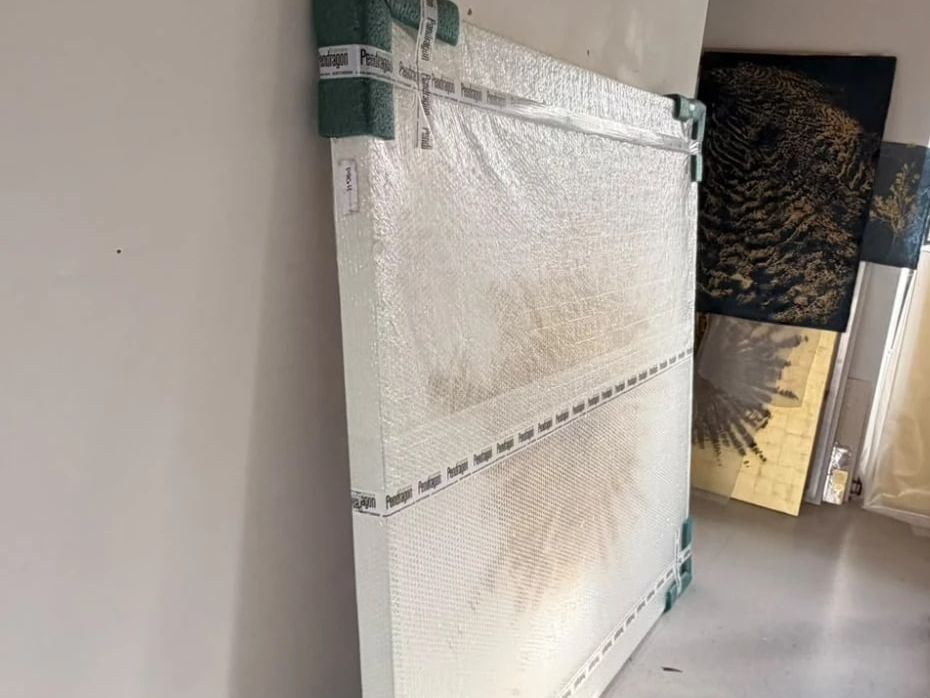
How paintings and framed works travel
Framed works travel upright, with the face and corners protected and nothing pressing on the glazing. Unframed canvases are handled by the stretcher, never by the painted surface.
Tell us if a work is glazed with glass rather than acrylic, if the frame is gilded or fragile, if it is a work on paper, or if the paint is still fresh. Each changes how it is protected.
Pieces are normally wrapped by you before collection; if you would like us to wrap them, we can, at an extra cost, so mention it when you ask for a quote. Large paintings go with two people.
Sculpture and objects
Three-dimensional work is planned around its weight, its base and anything that projects. Tell us whether it has a separate plinth. A photograph from two or three angles tells us more than a long description.
Antiques and furniture
Antique furniture is checked for loose veneers, handles and glass before it moves, and doors and drawers are secured. Send the measurements and say whether it comes apart. For larger pieces, see man and van for antiques and furniture.
Working to galleries, studios and sale rooms
We collect from studios, galleries, framers, homes and sale rooms, and deliver door to door: gallery to gallery, gallery to a private address, or a private address to a gallery. Where a building has a goods entrance, a booking system or set loading times, send the details with the request and we work to them.
For a museum or public collection, send any transport conditions set in the loan or acquisition paperwork. We read them before we quote and say which we can meet and which we cannot.
Bought at auction? See auction collections. Showing at a fair? See art fairs and exhibitions.
You deal directly with the team planning and driving your job, from the first message to the handover. About HR Logistics.
Official sources
Rules change. Check the official guidance for your own consignment; we will talk it through with you.